
Shop & Commercial Floors
Floors that work as hard as you do.
Home workshops, barndominiums, commercial kitchens, and retail floors. The same flake-and-polyaspartic system, built for hard use.
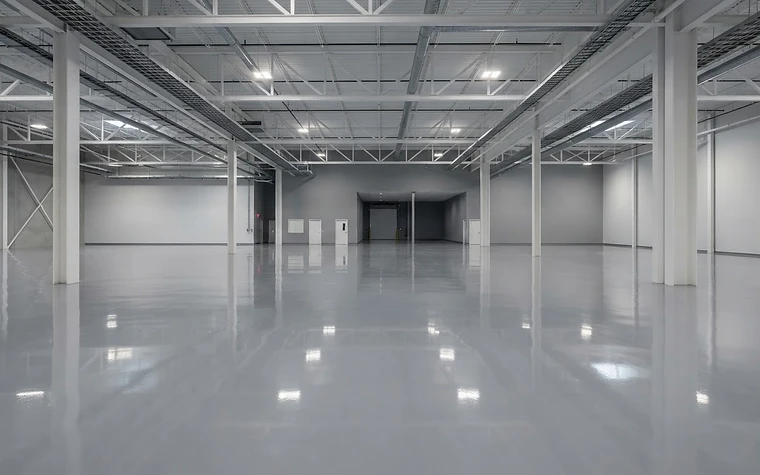
Commercial Grade
Engineered for real work.
A pretty floor that can't take a dropped wrench isn't a shop floor. Ours can.
Heavy-Duty Durability
Engineered for forklifts, jacks, tool chests, and constant traffic — without scuffing or gouging.
Seamless & Sanitary
No seams means no trapped dust, oil, or debris. Sweeps and pressure-washes clean in minutes.
Anti-Slip Options
Add aggregate for extra grip in wet shop environments and high-traffic commercial spaces.
Clear Communication
We tell you what to expect, schedule around your hours where we can, and show up when we say we will.
Sample
A shop floor you can eat off of.
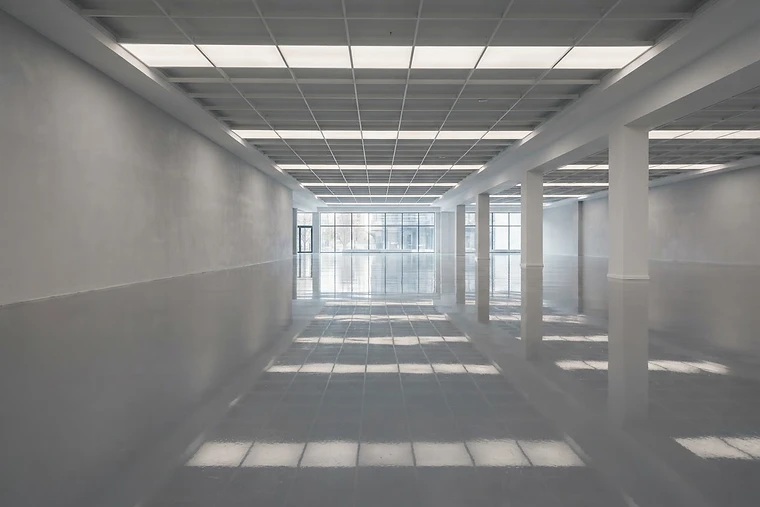

Sample image — replaced at launch
Our Process
Five steps. No shortcuts.
Every floor gets the same careful prep, quality materials, and attention to the details that make it last.
Prep
We diamond-grind the concrete to open the pores and remove every stain, coating, and imperfection — with dust suppression.
Repair
Cracks, spalls, and pitting are filled and leveled so the finished floor is seamless and structurally sound.
Base Coat
A moisture-tolerant colored epoxy base coat bonds directly to the concrete for a quality foundation.
Flake
Your chosen decorative flakes are broadcast to full refusal for a textured, slip-resistant, custom finish.
Topcoat
A UV-stable clear polyaspartic topcoat locks the flakes in and delivers a high-gloss sheen.
The Complete Guide
Shop, barndominium, and commercial floor coatings in Northwest Houston.
Workshops, metal buildings, barndominiums, commercial kitchens, and retail floors all ask more of a coating than a residential garage does. Here is how our flake-and-polyaspartic system holds up to that work, where it fits, and what to consider before you call.
What makes a floor coating commercial-grade
There is no separate "commercial epoxy" product line hiding behind the residential one. The difference between a floor that survives a working shop and one that does not comes down to three things: how well the concrete was prepared, how much material is on the slab, and whether the topcoat is hard enough for the traffic. Our system addresses all three. Every floor is diamond-ground, not etched. The epoxy base coat is applied at full build, the flake broadcast adds thickness and texture, and the polyaspartic topcoat is the hardest, most chemical-resistant layer in the system.
Polyaspartic is the part that matters most in a working environment. It resists gouging from dropped tools and dragged equipment, it shrugs off brake fluid, oil, coolant, and cleaning chemicals, and it does not soften under hot tires or sun through an open bay door. It is the same reason we use it on garage floors, only in a shop the difference is more obvious because the floor gets used harder.
Home workshops and detached shops
The most common commercial-style job we do is a homeowner's shop: a detached building, a converted barn, or a three-bay garage that is really a workspace. These floors see welding spatter, hydraulic jacks, rolling toolboxes, and years of dust. A flake floor makes the space brighter, easier to sweep, and easier to find dropped hardware on. Mid-tone grey blends like Gravel and Orbit are the practical choice: light enough to reflect overhead lighting, busy enough to hide the inevitable.
For shops with heavy point loads, tell us at the estimate. Jack stands, engine hoists, and lift posts concentrate weight on a small footprint. The coating handles it, but we may recommend a slightly heavier topcoat build or an aggregate in high-traffic lanes.
Barndominium floor coatings
Barndominiums are everywhere in Waller, Hockley, and the rural edges of Magnolia and Tomball, and they present a specific challenge: one slab that serves as a living space on one side and a shop or garage on the other. A flake coating is one of the few floors that works across both. In the living area it reads as a finished, decorative floor. In the shop bay it is a work surface. Same material, same color, no transition strip, no threshold.
Metal-building slabs also tend to be newer and often still curing, which means moisture. Our moisture-tolerant epoxy base is designed for exactly that. We check the slab before we coat and we tell you what we find. Warm blends like Cabin Fever, Wombat, and Coyote are popular in barndominiums because they sit naturally next to wood, stone, and metal.
Commercial kitchens and food service
Commercial kitchen flooring has to be seamless, easy to sanitize, slip-resistant, and tough enough to handle hot water, grease, and heavy rolling equipment. A flake-and-polyaspartic floor checks every box. The finish is non-porous, so there is nowhere for grease or bacteria to hide. It can be scrubbed and mopped with commercial cleaners. And the flake texture, with an added anti-slip aggregate, gives line cooks grip on a wet floor.
The other advantage in a kitchen is that there are no grout lines. Tile grout stains, cracks, and traps grease. A coated floor is one continuous surface from wall to wall, and it can be coved up the base of the wall to eliminate the corner where dirt collects. If your kitchen is being inspected, a seamless floor is one less thing to worry about.
Retail, warehouse, and light industrial floors
Warehouse floor coatings and retail showroom floors are about durability and appearance in equal measure. A polyaspartic finish handles forklift and pallet-jack traffic, resists tire marking, and cleans with a scrubber. In a showroom or retail space, a flake floor looks finished and intentional without the cost of tile or polished concrete. We can install solid-color coatings for line striping and safety zones alongside flake areas.
For larger commercial floors, scheduling and access are usually the deciding factors. We will work through those with you at the estimate, tell you clearly what to expect, and show up when we say we will.
What to know before you get a commercial floor quoted
- What is on the slab now. Old coatings, sealers, paint, and heavy oil contamination all affect prep. Tell us what you know.
- How the space is used. Rolling loads, point loads, chemicals, hot water, and foot traffic each push us toward specific topcoat and aggregate choices.
- Whether you need cove base, line striping, or anti-slip zones. All are available and priced by the linear foot or area.
- Access and timing. Empty, accessible floors are faster to prep and easier to price. If the space has to stay partly in use, we will plan around it.
- Drains and slopes. Kitchens and wash bays often have floor drains and slope to them. We coat right up to and around drains.
Pricing for shop and commercial floors
Shop and commercial floors are priced by square footage, concrete condition, and any add-ons such as cove base, aggregate, or striping. Larger floors bring the per-square-foot cost down. Our project minimum is $1,400. Because commercial slabs vary so much, we always do an on-site estimate rather than quote from a floor plan, and the written price we give you is the one you pay. See the Pricing page for how we think about it.
Commercial floor coatings across Northwest Houston
Bluebonnet Epoxy Co. coats shop, barndominium, and commercial floors throughout Magnolia, Tomball, Cypress, Waller and Hockley, Pinehurst, and Spring. If you are looking for a concrete floor coating contractor near you on the northwest side of Houston, call or text 346-332-9612 or use the Free Quote form.
FAQ
Shop and commercial floor questions, answered.
Is a flake floor tough enough for a working shop?
Can you coat a commercial kitchen floor?
Do you coat barndominium floors?
Can you add line striping or safety zones?
How do you handle floors with oil contamination or old coatings?
How is a commercial floor priced?
Let's talk about your commercial space.
Free on-site estimates. Written quotes. We show up when we say we will.